best mobile phones from a great mobile phone UK site mobile phones t mobile and o2 compared

Posts filed under Prototypes

Video: Unbelievable 3D Maps on Android

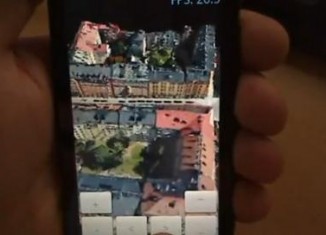
Ericsson’s R&D labs have been working on something super-tasty – 3D maps for Android phones. They’ve create a set of APIs that push 3D map data to Android phones, which let you rotate the maps, zoom in and out, and even zoom into things like buildings.

Well, not quite zoom into, but see the video for yourself (after the jump), and you’ll see if feels like you can fly into someone’s bedroom window!

It’s only a work in progress at the moment, so the mapping data is only available for Stockholm. It clearly works though, so it shouldn’t be too long before mobile mapping looks this good on every phone!


Video of Synaptics Fuse, the first squeezable haptic phone

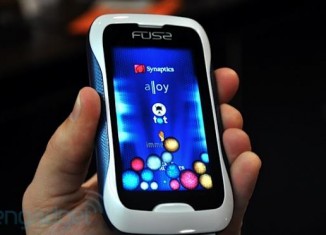
If you think touchscreens are old fashioned and accelerometers are so last year, then Synaptics have go the phone for you – the Synaptics Fuse, a new prototype phone with working technology that was shown off at CES 2010 this week.

The Fuse features more capacitive touchscreens in one phone than in the entire range of Nokia devices! The front display in obviously a capacitive touchscreen, but so too is the back…and the sides as well!

OK, so they’re not screens exactly, but they are capacitive and they do respond to touch to produce a responsive interactive interface unlike any ohter phone on the market today.

More details and video after the jump.


Video of Asus Waveface concept phone

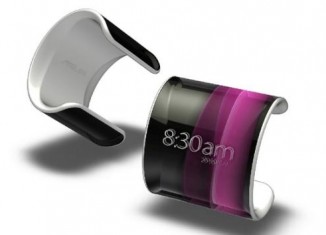
Asus have a tradition of showing off odd-looking concept phones at CES, and CES 2010 is no different. They’ve gone one better this year, though. They’ve come up with a whole range of concept gadgets, each given the WaveFace name, and all of which jump on as many bandwagons as Asus could think of!

The concepts aren’t exactly new. Wearable smartphones, information pushed to you whenever you need it, info available form all sources at all times, yada yada!

The only difference is that the concepts are being demoed at an electronics show where the gadgets are actually doing exactly what Asus reckons the devices of the future will be doing!

Other than the bendy smartphone, everything else you see in the video after the jump is pretty much here now – just check out the latest gadgets at CES 2010 to see for yourself!


Android phones get huge speed boost thanks to Intel

Researchers at Intel are working on a new way of speeding up smartphones such as Android and the iPhone using the concept of Cloud Computing. Called CloneCloud, Intel’s research literally creates a clone of a smartphone on a server. When the smartphone needs to perform CPU-intensive tasks or tasks that drain the battery, it connects to its clone on the server, and lets the clone do the heavy lifting. All the smartphone has to do is to wait for the results to be returned.

The advantage of this is obvious. Servers are orders of magnitude faster than smartphones, and they don’t rely on batteries either! Not only does the CloneCloud concept speed up execution, therefore, it should also lead to significantly longer battery life as well as enabling the use of much more complex applications such as face recognition.

More details after the jump.


Nokia Research gadget in stealth mode at CES

Now here’s something that didn’t get much attention at CES, yet has the potential to radically change the way you live your life. Nokia were showing off a new gadget in what can only be described as stealth mode – stealth, simply because although it was on show, nobody seemed to spot it!

The gadget in question is straight from the Nokia Research Center, and is called the Locate Sensor (with a name like that, you can tell it’s from their research arm rather than their marketing department!). All it is,simply, is a little gizmo that you can attach to things, and that interacts with your phone according to the distance it is away from you.

Why is this so important?…


Intel working on battery-free mobile phones

Interesting news reaches us from sister-site MediaMentalism of new technology being developed by Intel that could lead to the development of mobile phones and other mobile and portable gadgets that don’t need batteries. Intel are working on a series of sensors that can capture energy from the environment.

The sun is an obvious example of where this energy comes from, but other examples that Intel are looking at include the motion of a trackball on a mobile phone and even the energy from a mobile phone basestation.

More info over at MediaMentalism.


Gorgeous Nokia concept phone just adds water

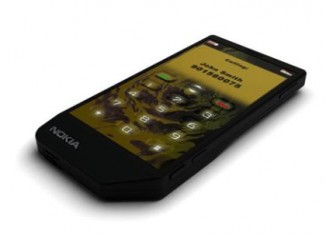
This gorgeous new concept phone design adds a new twist to the touchscreen craze that’s been sweeping the mobile phone world ever since the launch of the iPhone last year. Touchscreens are great when using gestures to control your user interface, but one of the key problems is, well, the lack of keys when entering text.

Unless there’s some kind of tactile feedback (such as that provided by Samsung’s haptic touchscreen phones), it’s difficult to determine whether you’ve selected a virtual key or not, thus slowing down text entry.


Projector phones and mobile HD displays on their way

A number of prototype mobile phone display technologies have been demoed at this year’s CEATEC 2008 exhibition in Japan. In addition to KDDI’s 3D mobile phone displays, there were a number of mobile phone projectors as well, which project the image from your phone’s screen onto a wall at sizes up to 50″.


World’s first 3D mobile phone screen

KDDI have been showing off a new prototype LCD display screen destined for mobile phones that’s capable of showing 3D images. Obviously you don’t get the full effect in the picture here, but that’s because you’re not just seeing one image: you’re seeing two, projected and interlaced by two separate LCD displays, one of which outputs images for the left eye, and the other for the right eye.


Next-gen DoCoMo phones predict your every move

Japan’s NTT DoCoMo mobile carrier is working on new technology for its next generation mobile phones that will quite literally predict your every move. Their next gen phones will be stuffed full of senors that will be able to identify the movement that you’re making.

Based on your actions you make when you move in a particular way (all of which the phone records via its sensors), sophisticated software will predict what your next actions wil be and will provide recommendations in advance. In other words, the phone will attempt to guess what you’re doing, and the predict what you’re about to do, which sounds just a little bit freaky if it works too well!