Since the credit crunch descended on the world like a tsunami of gloom, things in the mobile phone sector have been shaken up as much as they have in every other sector. Mobile phones obviously cover the entire sector of price points, from virtually disposable, to completely unaffordable.
With an impending global recession looming on the horizon, though, it's the more expensive designer phones that will start to struggle first. Designer phones are all about luxury, offering looks but few frills for a designer price. When everyone's cutting back on their spending, though, look are the first thing to go. If you can make do with a similar phone that looks a bit uglier but offers the same features as a designer phone, what are you going to choose when money's tight?

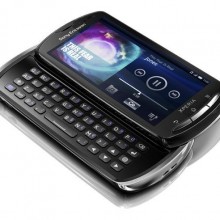
News now of the Sony Ericsson W705, the first Walkman phone from Sony Ericsson to feature Wi-Fi. A cool, if slightly ungainly-looking slider phone, the W705 is designed with fast connectivity in mind, to enable people to download their tunes (ideally from Sony Ericsson's own music store) wherever they are.
Obviously Wi-Fi will help, but if you're outside of a Wi-Fi hotspot, the W705 also comes with HSDPA, meaning you can download your tunes at 3.2Mbps wherever you are (unless you're with T-Mobile, who for some odd reason seem to have a blackspot in Slough and Devon!)
Posted on Monday, November 17th, 2008 at 8:22 pm by Mike Evans
Filed under
Nokia,
Nokia E63

Noia have finally officially announced the Nokia E63 business phone. Set to replace the Nokia E71, the new E63 shares many of the features of it predecessor, including a gloriously bright screen capable of showing 16 million colours, but will come with a new lower price and a touch-sensitive Navi-Wheel around the central menu button.
The E63 is designed primarily for business, and so as well as the full QWERTY keyboard, will also integrate seamlessly with a wide array of different email systems. Despite being designed for business, though, it also comes with the usual array of multimedia features you'd expect from a consumer phone, such as 2 megapixel camera, video recorder and GPS unit.

UK mobile phone retailer Phones4U have pulled off a bit of a coup by securing sole distribution rights to the new Blackberry Storm, RIM's first touchscreen smartphone that's currently being heavily advertised on the TV. The Storm breaks new ground for RIM in that its features are similar to other smartphones, and so rather than being pitched solely as a phone for business, it's also being pitched to consumers who like their smartphone to have multimedia features as well as enterprise-level productivity tools.
In many ways, then, the Storm can be thought of as an iPhone for business. It's undoubtedly classy, and with all the gizmos you'd expect from a smartphone, such as GPS, 3.2 megapixel camera, touchscreen, etc., combined with RIM's legendary email features that the BlackBerry range is infamous for, it should go do well with professionals.

What better time for a Nokia N85 review than the day before its release? Yes, the latest all singing all dancing N-Series phone from the Finns is about to hit our shores (and our stores!), as the Nokia N85 is launching in the UK on Hallowe'en of all days (second only to April 1st in auspicious release dates!), so right in the nick of time, let's check it out and see what it offers.

In an intriguing article, long-time technology pundit Bob Cringely has made a compelling case for the death of Windows Mobile. He is, as he admits, no expert on mobile phones, but this counts in his favour as he has no bias towards one platform or another.
Analyzing the current mobile phone market and some of the announcements that have been made this year, he predicts that Apple's iPhone will become the dominant smartphone platform, Google's Android will be second, and Symbian and RIM fighting each other for third place. Windows Mobile, meanwhile, will simply wither on the vine and eventually be killed off by Microsoft.

I thought it was about time I did a Samsung Pixon review, as I missed the initial announcement of this monster 8 megapixel cameraphone, and the Pixon looks like it could become the most advanced camera phone on the market. As you'd expect from a top-end Samsung cameraphone, the Samsung Pixon has a huge range of features, some of them straight from a dedicated digital camera.
Samsung are serious about the Pixon. They see it as a genuine challenger to Sony Ericsson's CyberShot brand of camera phones, and so are using all their digital camera experience to create a new range of high end camera phones based on the Pixon brand.
But enough of the background. What about the phone? Read on for initial Samsung Pixon M8800 review.

When I first picked up my Samsung Tocco review unit, I was a little skeptical about it. The Tocco is a touchscreen phone, you see, and I couldn’t help but think that it was yet another touchscreen phone that was launched in response to the iPhone, but which didn’t actually work all that well.
A poorly implemented touchscreen phone is little short of a disaster. They’re so slow an inaccurate, they make the entire phone almost unusable.
Fortunately, my misgivings with the Tocco proved entirely unfounded. It’s a super-slim feature-packed touchscreen designer phone from Samsung that’s well put together and a lot of fun to use.
Posted on Monday, October 20th, 2008 at 11:41 pm by Mike Evans
Filed under
Phones,
T-Mobile G1

With the T-Mobile G1 Android phone just days away from launch (22nd October in the US, 30th October in the UK), opinions are already been expressed among the blogosphere.
Overall reviews seem to be favourable, particularly given the G1 is the first of the first generation of Android phones, but there are two key weaknesses that might effectively limit the G1's appeal: lack of video features, and, ironically, over-reliance on Google.
So should you buy a T-Mobile G1? Read on after the jump...
Posted on Thursday, October 16th, 2008 at 9:33 pm by Mike Evans
Filed under
LG,
LG Prada II

LG has officially announced its new LG Prada II designer phone. LG hopes the Prada II will build on the success of the original LG Prada phone, which was touted by many as an iPhone killer when it was first launched. In fact, as the first touchscreen phones to be released on the market, the original Prada looked so similar to the iPhone, that many people wondered if they were developed by the same team!
They weren't of course, and although the Prada sold over a million units, it never matched the success of the iPhone.
The LG Prada II, in contrast, is being released into a world that's nopw grown accustomed to touchscreen phones, and so won't have the direct iPhone comparisons to struggle against. This has give LG the freedom to be a bit more experimental with its design.